Someshwar Mehra

  • Save the Brand – Kill the Brand Manager!

    Save the Brand – Kill the Brand Manager!

    Image from: wallpaperflare.com

    As I mentioned in my last piece, in this one we will explore the relationship between the Brand and the Brand Manager. Despite the heading, I am no Marketing Tarantino out to kill Brand Managers, nor do I have anything personal against them. Disclaimers done, let’s dive in…  

    Brands – the third person

    Let’s start with some common phrases we must have all heard, or used ourselves when working on brands or dealing with Brand Managers (or other marketing ranks) –

    – “Where can we take the Brand?”

    – “The Brand needs to do this”

    – “This is not the direction I want the Brand to go”

    – “Where is the opportunity for the Brand”… the list is endless.

    Nothing out of the ordinary in referring to a brand like that. However, what I always found odd was how the brand was ‘person-ified’ or referred to as a ‘third person’, and treated like an inanimate entity basis convenience. While the importance of getting into the consumers mind and mining insights has been discussed even after the world was forced to sit at home, there have been few crusaders calling for Brand and Brand Manager ‘unification’.  

    Brand – the ‘third person’

    This duality struck me afresh as I revisited Kabir’s poetry. In this one he uses an analogy from the Upanishads, that of twin birds sitting on an upside down tree. The bird on the lower branches (Bird 2) is busy tasting various berries, while the Bird 1 observes silently. Bird 2’s quest for sweet berries amidst the sours ones keeps taking it higher on the tree till it reaches Bird 1, which has been sitting still and calm. This is when Bird 2 merges with the Bird 1, losing desire for berries altogether.  

    In the context of Kabir’s analogy, the Brands Managers are like Bird 2. Restless and in search for the next big opportunity to leverage the brand, gain share, exceed targets. This quest naturally yields mixed results as they did for Bird 2. All this time, like Bird 1, the Brand observes the Brand Manager patiently…

    Brands and Brand Managers

    As per Low & Fullerton’s book, the birth of Brand Managers (and their berry hunt) can be traced to 1931 when P&G decided to have dedicated Brand Managers to handle the marketing and related activities for each brand. The model hasn’t changed much since.

    The Brand Managers continue to be called by many names; guardian, gate-keeper, owner, stakeholder, custodian… all signalling ‘ownership’ of the brand. This automatically creates a separate ‘other’.  

    The brands in turn are treated like possessions. Vocabulary revolves around ‘exploiting’ marketing opportunities, ‘milking’ the Brand or its communication, ‘building’ Brands and Brand Equity… all signal towards asset owners seeking to maximise their gains.

    The Brand Managers are under constant pressure to maximise brand performance given increasing competition, higher targets, shortening planning cycles. As a reward, they live to see another month or quarter and perhaps get that increment and promotion.

    Result of duality

    This pursuit of personal-professional gain often yields mixed results. Sometimes, even at the risk of alienating customers. Let’s look at a recent example of a ‘classist’ ad for a dough maker which had to be retracted. This ad was one amongst many other Brands trying to exploit the Covid-19 opportunity.

    It had a clear rationale to push purchase, that of personal hygiene while hand-kneading the dough. A perfectly reasonable proposition given our blind war against a crafty virus.

    The missed aim

    The “approved” communication misfired with its clearly elitist point of view which questioned the hygiene of middle class India’s domestic staff. The offensive ad was subsequently retracted though it may continue to haunt the Brand in its internet afterlife. One only hopes the person concerned lived and learnt.

    This is a classic case of the duality. Now, had the Brand Manager thought ‘as’ the Brand, they would have realised that Indian homemakers share a complex bond with their domestic staff. Within social hierarchies, lie mutual empathy and protective camaraderie.  

    What could have been done?

    One possible solution could have been for the Brand to question the very method of kneading dough and replacing it with an ‘untouched by hand’ alternative.

    This marketing blooper happened at a time when 71% percent urban Indians don’t want brands to exploit the pandemic and 79% feel brands must show how they can be useful in such times. This Kantar research clearly shows consumers expect ‘humane authenticity’ from brands in these times.  

    How to end the duality?

    We need to fundamentally change the way we think, speak and act in this relationship. Here are some suggestions –

    – Stop dating and ‘move in’ – idea is to not to think only of personal benefits like promotions or increments, but also about the Brand. The thinking needs to change from ‘what’s in it for me’ to ‘let’s do this together’. When the two work as a team, the results are always better.

    – Change the vocabulary – the language needs to move from ‘possessive’ terms like manager, owner, custodian to relationship oriented terms like, partner, spouse, buddy, team… only when we use these terms will we ‘feel’ and ‘live’ them.  

    – Change of command – realise that in this chicken and egg situation, the Brand came first and Brand Managers later (around1931). Therefore, keeping the interests of the Brand before the gains of the Brand Manager is akin to nurturing the goose that lays the golden egg.

    – Think AS the Brand – one could start by asking questions like, “what would ____ (Brand) do if it was a person?” instead of trying to leverage or exploit every given opportunity. Getting ‘under the skin’ of the brand will intuitively lead to the correct answers.

    To conclude, I feel marketers, brands and consumers have evolved over time. Marketing has moved from glamorous aspiration to desirable authenticity. Biggest live example is the social media posturing by brands in the United States as they throw their lots behind race and sexuality issues amidst protests and pride in the same month (2020 really messed up their marketing calendars). The ‘authentic’ ones get new consumers and loyalty, while the ‘posers’ get flak. The brands that will succeed in the future will be those where the Brand and the Brand Manager stand united, on a single stage vs. a Brand Manager propping up a ventriloquist’s puppet.  
  • Don’t Do What Your Parents Did: How to Avoid the ‘Favoritism Trap’​ at Work

    Don’t Do What Your Parents Did: How to Avoid the ‘Favoritism Trap’​ at Work

    Image from Alhambrachamber.org

    We have come a long way over the last few posts. Our journey started with the kind of managers Ramayan moms might have given this world – dutiful Ram, saviour Lakshman or politician Bharat. We then saw how they may play the Victim-Villain-Hero in everyday office situations. In the last post we zoomed out to the see the larger life trajectory with ‘life scripts’.

    With this post, let’s try explore how ‘Managers’ may be prone to behaving like their own parents by picking favourites even at work. We will examine the possible impact of this on their ‘Team Members’, and how Managers can be more aware of the ‘favouritism trap’. To illustrate my point, let’s look at Ramayan’s mother Sumitra and her twins; “favoured” child Lakshman and “non-favoured” Shatrugan.  

    Family scripts

    First, let’s understand why Managers would mimic their parents at work. This is where ‘family scripts’ come in. These are a sequence of repeated actions that children learn from their parents in everyday situations; around the dining table, during home-work, handling kids’ disputes, and so on.

    A child internalises these scenarios over time and replays them when in ‘similar’ circumstances. This could also explain why we behave more like our parents as we get older, irrespective of our relationship with them. We subconsciously ask and answer, “What would my mother or father do?”

    Family scripts and children  

    Children act and react as per their own internalised script. These tend to differ amongst siblings depending on each ones perception of how their parents treated them. Were they the ‘favoured’ child like Lakshman who Sumitra was proud of, or the ‘non-favoured’ child like Shatrugan who seems more incidental in the epic.  

    Do parents really play favourites?  

    Yes, invariably, and inadvertently! Although most parents deny it, there is increasing research to show the opposite. It only gets more apparent as kids get older and more perceptive, or maybe parents become more obvious with age. Let’s see how things pan out for either child.

    The favoured child

    This one usually gets more attention, praise, time, and perhaps less discipline. This could be because of various factors like; birth order (oldest or youngest tend to be favourites), gender (patriarchy’s sons), child’s disposition, academic promise, shared interests with the parent (mothers dressing up daughters, and fathers playing cricket with sons) and so on. Parents are more invested in making this child successful, and even make excuses for their shortcomings.  

    Similarly, Ramayan glorifies Lakshman’s bravery and dedication to Ram and justifies his lapses, like his nose chopping temper (which set the ball rolling), and argumentativeness. Lakshman displays high levels of confidence, self-esteem, and performance, characteristic of a favoured child.

    On the flip side, there is also a chance of these kids not being able to develop their individual personality since they are so busy trying to please others. Similarly, Lakshman doesn’t seem to have an independent identity outside Ram’s shadow.   

    The ‘non-favoured’ child

    This one tends to get lesser attention and approval, and more disciplining. Studies show such kids are more prone to depression, anxiety and low self-esteem as adults. They may seek ways of feeling special outside the family, like in class or at work.  

    One a positive note, growing up away from the limelight allows their personalities to develop independently instead of always being the ‘family pleaser’.  

    Shatrugan symbolises the ‘non-favoured’ child. He grows up largely ignored by both, his mother and the epic. Fleeting mentions in popular narratives indicate possible low self-esteem and little acknowledgement. In today’s times, one wouldn’t be surprised if he ended up depressed, or with a drinking problem.

    On the plus side, he seems to have had the smoothest ride amongst the brothers and is known for being a fierce warrior. Depends on how you see it.  

    Managers and the ‘Favouritism Trap’  

    Now, let’s look at Manager’s who are expected to lead and treat their Team Members fairly, like parents are.

    Annual reviews with the team would be the big test. Teams showcase their achievements over the year and hope to get larger budgets going forward. This part is objective and measurable.

    The ‘favouritism trap’ comes in when Managers have to prioritise and decide resource allocation. This is where unconscious bias or conscious preferences can creep in.  

    Favouritism – Scenario 1 

    The Manager backs the “favoured”, flagship brand in the portfolio. This could be because it’s easier to achieve targets, or because other favourable factors like; distribution, market-share, product popularity, consumer preference, and so on.

    The other half of the equation is the ‘team member’ working on the brand. We have all witnessed favouritism first hand at some point in our professional lives. Managers typically try and justify this using the team members’ objective performance in a show of fairness.

    On the emotional side, however, it could be because; they ‘connect’ with the person better, see their younger self in them, temperamental compatibility, or maybe because the person is just genuinely likable.  

    Something similar happened when a popular, but mature food brand was ‘favoured’ over smaller brands. Other Team Members said it was easy to meet targets this way, shrugged and got on with their work. Additionally, the brand was being led by a ‘favoured’ Team Member.  

    It all came to head when the flagship product ran into trouble and took the Manager down with it.    

    Favouritism – Scenario 2

    This is when a newer, smaller or weaker brand is favoured, or is declared the organisations future flag bearer (like the youngest child). By example, it is common amongst indulgent snacking brands to invest heavily in healthier alternatives to leverage changing consumer preferences.

    Some additional factors that may work for the Team Member on the brand could be commonalities with the deciding Manager like; race, ethnicity, school attended, and so on.  

    Non-favoured ones 

    While all this plays out, there are the non-favoured ones keeping each other company in the background. They are aware of their negligible chances of garnering favour. Eventually they may stop trying, go into survival mode and start looking for other opportunities.  

    Now, there are plenty reasons for being ‘non-favoured’. These could range from; temperament and compatibility with others at work, general capability, race, sexuality, gender, personal biases, etc. Sadly, it could also be because the Manager perceives the Team Member as a potential threat. Sad, but we all have at least one ‘sucky boss’ story.  

    The price of being favoured

    While the favourites get the limelight and budgets, they also need to ‘please the parent’. They would be obliged to work longer hours, over-reach, sacrifice personal lives, and anything else demanded of them. Additionally, they also face resentment and lose camaraderie from the non-favoured team members – like in soured sibling relationships.

    How can Managers avoid the Favouritism Trap?

    Like parents deny favouritism, Managers too tend to justify themselves with results. However, it becomes more subjective when it comes to the team member they favour. While optimising resources and achieving targets is important, so is creating a positive team dynamic.

    Below, are my three bits for “Manager Parents” –

    – Stop comparing – one can’t compare oranges to apples. Each product and Team Member are different. By example, a carbonated beverage and fruit juice from the same company work very differently. Their consumers, competition, imagery, consumption pattern, are all different. Hence, comparing marketing campaigns and outcomes with so many other variables is just unhealthy.

    Take out – it’s good to praise, but not compare. Good work should not be praised by putting others down. This only breeds resentment.

    – Stop team competitions – yes, you read that right! These are best saved for sports days. Since no two brands, or teams are equal, making them compete is like a swimming competition between a fish, cat and monkey (no offence meant). While all three can swim, their innate abilities and capabilities are vastly different. Similarly, a company may have three detergent brands. These would typically work to different strengths, and appeal to different audiences.  

    Take out – push to perform, not compete – this is a win-win. A high performing team combined with a healthy work environment. 

    – Don’t take sides – while humans are emotional and not objective, it is important to be fair as possible. Managers will find themselves in situations where they need to play referee. It could be personal disagreements, prioritising resources, disciplining, giving time, etc. Any perception or evidence of favouritism will only result in loss of respect and fester misgivings.

    Take out – be fair and objective as possible. As humans we may end up going easier on our favourites, but clear efforts at fair-play are appreciated by everyone.

    Conclusion – parental favouritism shapes a child’s ‘family script’. This is turn could affect their managerial styles. They may end up making biased decisions time and again when they fall back on how their parents treated them. However, it is important to be ‘self-aware’ of this favouritism trap.

    Human tendencies cannot be helped, but being aware of them can help leaders in the long run. One needs to be mindful; to not compare different brands and teams, making them compete in unfair competitions, and try to be fair as possible.

    In the next post, I will try to explore the Brand and Brand Manager relationship. In the meanwhile, try not to ponder too much over the price you may have paid for being the favourite, or the neglect you felt, both as a child and at work. Do let me know if there is a specific aspect of marketing you would like me to think about, or try solving for.

  • Marketing Tips from Gods of Personal Branding

    Marketing Tips from Gods of Personal Branding

    Source: Sanjay Patel

    Most of us start off trying to figure out: “What do I want to do in life?”, only to wonder, once the inevitable mid-life crisis hits “What is the purpose of my life?”

    My last post discussed how managers keep switching roles in the drama of life. We move from playing, victim-villain-hero, depending on the situation. In this post, let’s zoom out and look at the ‘life scripts’, ie. the entire lifespan of brands, through examples gleaned from Indic mythological characters. 

    Life Scripts – according to this concept, children as young as five years old, can decide how their life will pan out and subconsciously work towards it. While the child may have written the script, their ideation and conditioning is based on their home environment. Much like the fate of brands, whose trajectories are decided by their ‘parents’ in their early years.                                                            

    Now, please don’t get fatalistic about choices you probably made at the age of five and think that it’s written in stone – nothing is (other than maybe stone etchings).

    The good news is that life scripts can be re-written. Simply put, old behaviours and conditioning, once identified, can then be changed. 

    To put this in a marketing perspective, let’s travel from Ramayan to the battlefields of Mahabharat. Through well-known characters, we will see the difference between life scripts that were fulfilled and those that were re-written. 

    Life script fulfilled

    Shikhandi’s story – in a past life, princess Amba, prayed to Lord Shiva that she should be the cause of Bhishma’s death for the humiliation he had made her suffer. Thus, reborn a girl – she was raised as a boy by King Drupad. In the battle of Mahabharat, Arjun stood behind Shikhandi and shot arrows at Bhishma, knowing Bhishma wouldn’t attack female-born Shikhandi. Her life mission complete, Shikhandi survives though goes on to lead an unremarkable life. 

    Drishtadyumna (Shikhandi’s younger brother, and Draupadi’s twin) story – he was apparently born out of fire, to avenge his father, King Drupad’s humiliating defeat in war caused by Dronacharya. Drishtadyumna finally beheads Dronacharya in the battle of Mahabharat. His life purpose fulfilled, Drishtadyumna later died in the same battle.

    Early death, once purpose served – we have now seen an example of a life that ended with its script – Drishtadyumna’s. Shikhandi’s example, on the other hand demonstrates how one’s life could lose ‘meaning’ after fulfilling its script. Life scripts don’t necessarily end with a person’s death. Scripts could even end earlier, causing a mid-life crisis. 

    Brands also face similar mid-cycle crises. Some become redundant or obsolete after serving their purpose, like CDs, and hand-held torches. Then there are those which continue to exist with waning fervour, much like life-changing products that lose their novelty – such as mobile phones and refrigerators.

    For such brands, trouble lies in being unable to re-write their scripts. The big question, is there a brand after-life while the brand still lives?

    Re-scripting Life  

    Story of Ganesha – conceived by Parvati to protect her privacy while bathing, Ganesh is beheaded by Shiva who was trying to get past him to enter Parvati’s space. Ganesha’s life purpose served in a single blow – literally!

    However, Ganesha, who is brought back to life by Shiva on Parvati’s insistence in a new avatar bestowed with an elephant’s head, lives on to add many fruitful chapters to his life – including writing the entire Mahabharat in a single sitting! 

    Krishna’s reinvention – the most well-known character in the Mahabharat, he was actually born to kill his evil maternal uncle Kamsa. He completed this mission by the age of eleven (as per some sources).

    However, his ‘original life script’ seems insignificant given his pivotal role in the Mahabharat – especially his existential discourse to Arjun on the battle field. 

    Both characters above, are successful examples of amazing brand reinventions, and re-writing one’s life script.

    I have put down some marketing lessons we could learn from these gods of brand purpose – 

    1.      One script can lead to many related script opportunities – Ganesha went from mother’s security guard, to symbolise wisdom, master of sciences, amongst others. Krishna, in turn went from cowherd casanova, to strategist, to existential authority and more.

    Takeaway: Similarly, brands can redefine their purpose by moving into ‘related’ product categories. A new purpose that leverages its existing equity to write a new script. By example, an established antiseptic brand can retain its germ killing properties and extend them to hand soap, bathing bars, hand sanitizer, house cleaner. This way it re-writes its life script beyond the first aid kit. 

    2.      Continuous reinvention – every new adventure earned both the gods a new name – usually to immortalise yet another story.

    Takeaway: Brands too need to be open to letting go of ‘their idea’ of self-identity, or what consumers think the brand stands for. Visionary marketers leap at new opportunities early, while others play catch-up for perpetuity. By example, inertia to move from camera films to digital cameras cost a company its life. Similarly, a carbonated drinks brand reinvented itself by investing in healthier products by spotting a change in consumer habits early on.

    3.      Completely re-write the original script – both Krishna and Ganesh proved their rivals and critics wrong by moving from their ‘original scripts’. They carved their own identities separate from their parents and original purpose. 

    Takeway: Brands too can enter new categories, and create brands independent of the mother brand. They may do this through acquisition or launching new brands. An Indian ‘salt to steel’ conglomerate is a great example of re-writing its original brand story.

    Conclusion – I hope this journey has helped you identify where your brands are. Product obsolescence aside, most brands can re-write their life scripts. One needs to identify old conditioning and baggage that needs to be shed. Then one can start looking to the future; by entering related categories, or entirely new categories. It is possible to reinvent brands, and for them to enjoy many-after lives even after their original purpose has been fulfilled.

  • Managers as Children Part 2 – the Ram, Lakshman and Bharat Triangle

    Managers as Children Part 2 – the Ram, Lakshman and Bharat Triangle

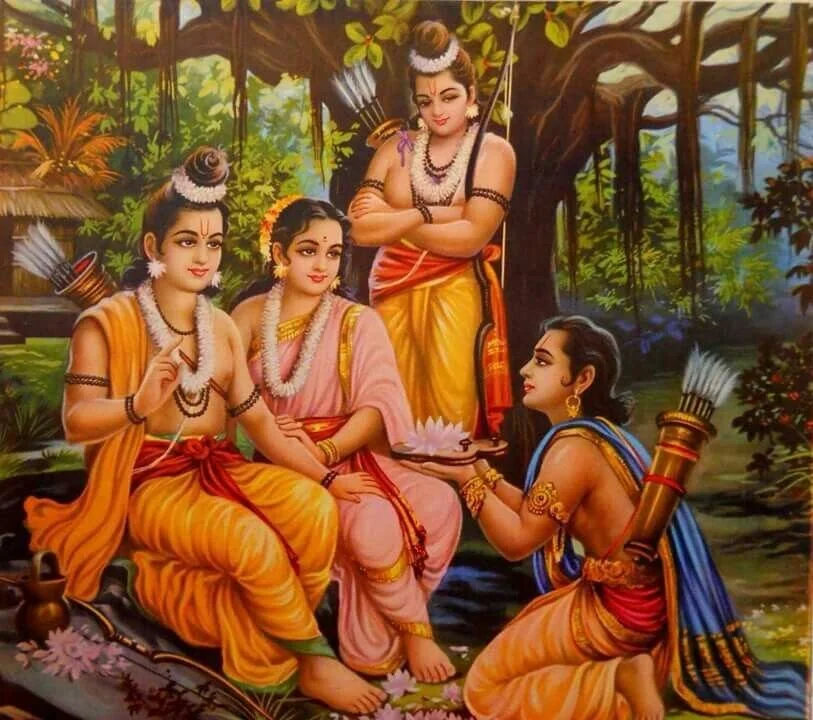
    Bharat Milap in forest – Pinterest

    My last post was about how Ramayan’s mothers shaped their sons’ characters and the kind of managers they would have grown up to be today. This post, is a bit longer than I would have liked it to be. So, everyone with short attention spans, or productivity goals, might want to read the last couple of paragraphs – promise not to take it personally.

    For those of you who are game for the ride, in true episodic fashion, I will quickly re-cap their managerial types –

    Manager Ram – sombre patriarch who takes himself and his work too seriously to really take a break himself, or cut anyone any slack.  

    Manager Bharat – office politician who knows just how to work the system, get the work done, and get the credit and the popularity scores. He isn’t to be messed with given the grudges he can nurture.

    Manager Lakshman – the work horse can be counted upon to deliver no matter the circumstances. He believes in doing what needs to be done and doing it, preferably with his team.

    Now, we know the boys inherited their mothers’ character traits. In this piece, I would like to explore, if the stories their mothers told them could have affected their self-perception in later life.

    The world of stories

    Children have always been told stories for two major reasons; to pass down history and culture, and to impart values. As Suryavanshi princes, it would be safe to imagine the boys would have been brought up on stories of valour, victory, fighting demons, keeping promises, sacrifice, kingly duties and such.

    Characters in these stories

    Stories in which their ancestors would be heroes, who fought villains and saved the victims. Exciting as these would be to children, the construct of the ‘hero-villain-victim triangle’ is old and universal. From Indian Panchtantra and Jataka tales to Cinderella and Snow White, all adhere to this classic format so well explained in Karpmans’ Drama Triangle which I will use as a base.

    Bringing stories to life – art of story telling  

    While i may have broken down the elements of a story, true magic happens when the story teller sparks the audience’s imagination. This is where mothers, Kaushalya, Kaikeyi and Sumitra come in. Their different backgrounds, and temperaments would mean all three would have narrated the same stories in their own ways – pauses, emphasis, drama and deviations… It’s likely, they subconsciously led their audience to roles basis their own conditioning.

    I will try to explain how, and maybe even stir some sentiments while I am at it –

    Ram – Ramayan’s hero, was actually the ‘Victim’ in need of constant rescuing!

    Kaushalya – probably emphasised, and herself exemplified the importance of ‘duty before self’ – Raghukul reeti sada chali ayi, pran jayi, par vachan na jayi (Raghukul kings rather sacrifice their lives than break promises)

    Ram the Victim – was the sweet, sacrificial eldest brother (though all four were born around the same time). His father took away his crown, sent him into the forest. His wife was kidnapped by a demon king. He had to ask Sugreev for help, needed Vibhishan’s secrets to defeat Ravan… See what I mean?

    When Victims become managers – the office ‘pleasers’ – always ready to help even if it comes at the cost of their own deliverable. They find it hard to say no, are easily bullied and emotionally blackmailed. Consequently, they end up biting off more than they can chew. ‘Poor me’, often finds himself at the receiving end of his boss or office bully (persecutor or Villain), or just doing the ‘wrong’ things. They possibly see themselves as unappreciated, over worked, bullied victims. This makes them ‘seek out’ Heroes to save them, if the Hero hasn’t already found them.

    Can Victim’s be saved from themselves – well they can! I found The ‘Winners Triangle’ was a simple counter to refer to. People, or managers, with such mind-sets can start with becoming more self-aware (it’s tough)! They need to accept their weaknesses, identify behaviour patterns, and take responsibility (stop playing damsel in distress). They should then take small corrective actions with progress milestones. Finally, they should be encouraged to keep an eye on the final goal and avoid the trap of the self-pity.  

    Victim brand marketing – was more prevalent until early 2000’s. Lice-infested girl in the playground, dark un-marriageable daughters, harried housewives without the whitest shirts… nice people who were ‘victims’ of uncontrollable factors. All of them had persecutors who bullied, shamed, or rejected them. The product played the Hero or rescuer. However, with the popularity of positive psychology, contemporary narratives avoid victimising and saviour searching.

    You may wonder, if the obvious Hero turned out to be the Victim, then who was the ‘real’ Hero? Well, who stood by Ram through thick and thin, even at the risk of his own life? (Raghukul and commitments?)

    Lakshman – popularly seen as Batman’s Robin, Lakshman is the ‘Hero’ to Ram’s Victim.

    Sumitra – spiritual and wise, probably taught Lakshman that Raghukul stood up for the weak and helpless.

    Lakshman the Hero – came to Rams defence against Vishvamitra when Ram broke Shiva’s bow. Unasked, he insisted on accompanying Ram and Sita in exile, also kept watch every night to protect them. He also reminded King Sugreev of his promise to help Ram… Righteous Lakshman was always rescuing Ram, and not the other way around! Hero Lakshman ‘needs’ Victim Ram to save, be relevant, and possibly avoid dealing with his own issues (insisted on going though he didn’t need to).

    When Heroes become managers – the ‘fire-fighters’. First line of defence; for the organisation, harried colleagues, or anyone else who they feel needs rescuing. These office superheroes are usually the dynamic rising stars and crisis managers. They are quick to come to the Victim’s rescue, and hold Persecutors accountable. They tend to thrive on adulation and hero-worship, which helps them hide or avoid personal inadequacies or issues from which they ironically can’t seem to save themselves.

    How do we help the ‘compulsive’ saviour – these people should be encouraged to stop at caring and ‘helping’ and not ‘doing’. They need to understand that they cannot ‘solve’ things for others. Instead of ‘enabling’ the Victims, and creating co-dependencies, perhaps a ‘mentor’ or guide like approach may benefit both parties in the long run.

    Marketing Hero brands – usually have problem-solution, saviour narratives. Toilet cleaners that save social embarrassment, pimple creams with miraculous results before a date, deodorants that attract potential mates… All products seeking out Victims who need rescuing from Villians or hopeless situations. However, of late many ‘saviour brands’ have fortunately begun stopping at ‘assistance’, and don’t ‘solve’ the problem – leaving the protagonists to close the loop themselves.

    We now close the triangle with devoted Bharat, who refused to be King, even temporarily, on principle, out of stubbornness, and spite for his mother.

    Bharat – the Persecutor or ‘Villain’ in this piece

    Kaikayei – the temperamental, politically savvy, queen probably taught Bharat Raghukul’s politics and battle tactics.

    Bharat the Persecutor – guilt-tripped Ram into giving him his share of mangoes in an archery contest so he would win. Condemned his mother for her politics, and blamed her for his father’s death, and sending his favourite brother in exile. Punished her, by not speaking to her for fourteen years, and not accepting the crown. Poor Kaikeyi – all for nothing!

    When Villains become managers – are often the office bullies – easily identifiable with their controlling, critical, often vengeful nature. They are quick to blame, and find scapegoats for everything that goes wrong. They are set in their ways, and bully ‘Victims’. They smartly try to side-step, or neutralise ‘Heroes’ with their manipulative tactics. They fail, only because others let them down.  

    How Villains can be reformed – this is tricky given their usually low levels of self-awareness (they are always right). They need to be reined in – told to be assertive and ‘ask’, and not get aggressive, pushy or vengeful. For Victims dealing with such colleagues, it is important to get as much clarity as possible about expectations – join the dots between what they think, say, mean, and actually want. Any slips will only be the Victims fault and unleash ‘deserved’ wrath of the Villain.

    Villain brand marketing – is possibly the subtlest. They don’t directly judge or shame people, but make them fear they ‘might’ be! Such narratives usually position products as fool-proof, fail-safe, solutions even children (or husbands) could use. The obvious, or right choice of pressure cooker, soft drink, detergent or appliance. These narratives put the onus of failure on consumers – because the product itself is perfect, if not the best!

    As I conclude this two part series, I may leave you feeling uncomfortable, seeing familiar characters through a new lens. It is not my attempt to ‘de-frame’ them, but to see them in a different context. While the characters have been viewed through a macro lens for the sake of simplicity, I assure you that characters keep switching between roles depending on situations.

    By example (to sooth any ruffled feathers by categorising Ram as a Victim), Ram played Victim when he was exiled for no fault of his, however became Persecutor or Villain when he shot King Bali by stealth. He then played Hero by giving Vibhishan political asylum.  

    I too have used the Ramayan symbolically, to convey a larger concept – of the strength and magnitude of maternal influence on a child’s life right into adulthood. Professional sphere is merely a ‘set’ for this play. Those missing a ‘father-figure’, the next post will try to include fathers too.

    Until then, I hope you enjoy identifying Victims, Villains and Heroes in work situations and life. More importantly, I hope it helps you understand yourself a little better – as writing these pieces did for me. Until next time… 

  • Managers as Children part 1 – Mothers of Ramayana

    Managers as Children part 1 – Mothers of Ramayana

    Kaushalya, Sumitra & Kaykei at the birth of their sons – Sadvani.com

    My last post was about the subconscious, self-sabotaging relationship, Indian Government seems to have with India Inc. This two-part post is also about the subconscious. This first one, is about the possible, subconscious, maternal influence that shapes their manager children.

    There is increasing research on the influence of mothering on children – well into adulthood. There are established linkages with adult anxiety, depression, and even crime! Dove’s ‘legacy’ campaign has already explored how mothers pass on their own body image issues to their daughters.

    Indic thinking does call mothers the first teacher. Possibly, because her teaching of ‘sanskaars’ or values is believed to start in the womb itself. Pregnant women are still asked to read religious or spiritual texts for the benefit of the child still in the womb (before Baby Einstein, epigenetics, or parental conditioning studies). The story of Abhimanyu learning how to enter the military formation (Chakraviyuah), while still in his mother’s womb, was recently revised with Mahabharat re-run in lockdown (this is not a case for a medically advanced Indic past).

    The mothers I want to focus on are little mentioned mothers of Ramayan – mothers of the four princes. As in most Indic tales, I realised even these three mothers were symbolic – like early archetypes. Here is my attempt to make you see them through my spectacles – 

    Kaushalya – chief consort, princess from Kosala (Orissa). From a long lineage of rulers, she was brought up to be a queen – learnt statesmanship, administration, public welfare, among other talents.

    The wife – was the queen Dashrath ‘respected’ the most and consulted on matters of governance. A woman of principles and duty, she continued to be a dutiful wife to the dying king even after he exiled Ram to the forest.

    The mother – passed her qualities to son Ram, who later personified the spirit of principles, duty and honour – questionably to a fault!

    Son Ram – upholder of rules, law, duty and morality, even at the cost of personal happiness.

    Manager Ram – possibly the sombre ‘patriarch’ with a limited sense of humour (if any). He believes people in office are paid to work and should do just that. Dislikes people taking too many breaks. Feels working from home is a scam and an excuse for employees to play hooky. Expects, and holds others up to the same standards of work, dedication and delivery as himself. Work-life balance is just new age ‘mumbo-jumbo’ he tolerates. Home is a place to sleep and change clothes.

    Kaikeyi – princess from Keykaya (Western Punjab region) was believed to come from a newer lineage of warrior kings. Given her own childhood environment, she was an expert at war-craft, weaponry, strategy and politics.

    The wife – the kings ‘love’, sweet natured, she was also probably the diva (no sexist offence meant) known for her formidable tantrums. She also often accompanied the king on military campaigns and even saved his life in a battle which begot her the two ill-fated boons she cashed at a strategic time.

    The mother – passed her nature to son Bharat – strong will, political and military acumen. She frequently sent her son to her maternal kingdom for grooming.

    Son Bharat – imbibed his mother’s temperament, he flew into a fit of rage at his mother’s political manipulation. Strongly condemns her, and apparently refused to forgive, or speak to her for the duration of Ram’s exile. He further displayed his own political and military acumen as acting regent for his elder brother until his return.

    Manager Bharat – is probably the office ‘politician/diplomat’ – sharply turned out, image conscious, has the office pulse. This winner of the popularity contest, is helpful, willing to cut people some slack, work from home, have some fun – as long as the work is well done! There is always credit and glory to be had – by means fair or not. Always the first hand to go up for any new initiative or up-skilling program. Prone to sulking if they feel side lined. Prone to bouts of public outbursts which pass quickly. Can patiently nurture grudges to settle scores.

    Sumitra – princess from Kashi (Varanasi). Of the ancient, spiritual kingdom, she was wise, peaceful, dutiful, devoted and pretty.

    The wife – ‘prettiest’, she is said to be wise, she often helped the king in stately matters. Sweet natured and coy, she deferred to Kaushalya as the chief queen and kept Kaikeyi in good humour.

    The mother – twins Lakshman and Shatrugna, were taught obedience, respect, dedication and loyalty to hierarchy and authority along with bravery.

    Son Lakshman – insists on accompanying Ram and Sita in exile. It is said he didn’t sleep for those fourteen years, keeping watch at night while Ram and Sita slept. When Sita was kidnapped, he identified recovered jewellery from the anklets as he had never looked his sister-in-law in the eye.

    Manager Lakshman – the dedicated ‘workhorse’, comes to work, and keeps his head down. Reliable, dependable, he lets his work speak for himself. Respectful of authority, the soldier and mission oriented leader is neither afraid of responsibility, nor leading from the front. He does what he needs to. The team player is happy to get his hands dirty, and share the occasional laugh – as long as things are under control. Mindful of hierarchy, he seems reserved and keeps his private life out of the office.  

    Conclusion – it is fascinating how King Dashrath and his sons drew their identity from the paternal clan and lived for its glory, but were actually like their mothers. Perhaps, I am not the only one to have the ‘aha’ moment here. Men may win the wars, but it is the women who seemed to rule – through their sons. I am not sure if this was some kind of symbolic balancing act, or ironical oversight. However, it does demonstrate the possible extent of a mothers influence on those who claim to shape history and office environments.

    The next post will explore another aspect of mothering – the stories children hear. Until then, see which of the three mother-archetypes fit you and those around.

  • Make in India and subconscious sabotage

    Make in India and subconscious sabotage

    Image – Sony Music

    My last post was about how India is perfectly poised to seize the Covid opportunity with ‘Make in India’. Well, this piece, in continuation, tries to look at another angle – India’s relationship with Business – from a socio-cultural lens.

    The troubled relationship has been written, analysed and discussed endlessly- more so in the coming days as the stimulus package becomes clearer. This piece, is my attempt at trying to decode the subconscious psyche, of this couple stuck in a seemingly toxic relationship (I have no late night RJ ambitions) –

    Government – the possessive partner – is convinced its bed-fellow (businesses), cannot be trusted. That they will cheat through non-compliance, lie and evade taxes, manipulate the system, and exploit labour, among other self-serving horrors.    

    Partner’s paranoia – government continues with a variety of rules and restrictions in the name of labour, consumer, national interest (very different from wedding vows of love and cherish). These laws make it tough to start, run, and even shut businesses. Bureaucracy and endless red tape turn the key in the chastity belt.  

    Abusers remorse – government occasionally feels bad about behaving this way with businesses. It promises fewer rules and sectorial reforms (like at happy hour last evening) – most turn out to be cosmetic (like improving ease of business ranking), with different ground realities (interviews with MSME entrepreneurs tell their story)

    Businesses – the weary partner – seems to be giving up on its abusive partner changing. They have begun moving offices, plants and funds abroad. Indian operations survive by exploiting loopholes and systemic weaknesses, and bribes. Ironically, resorting to tactics the government suspected them of. They survive despite everything, as beautifully detailed in India Grows at Night by Gurcharan Das.

    While the above analogy is debatable, I feel the relationship suffers from ANTICIPATED BETRAYAL! Both parties EXPECT to be short-changed, cheated and lied to! The counter-intuitiveness of the situation got me thinking about the psychological evolution of this relationship –

    To begin with, India was traditionally an ‘artisan’ nation – not industrial. As per Chanakya’s Arthashastra, rulers provided a conducive business environment with limited state role. Artisans and tradesmen freely moved to kingdoms with favourable policies and patronage. Businesses were taxed basis a kings policies or needs (mostly military or debauchery). One could expect leniency in tough times (‘deferred’ payments perhaps?)  

    Colonial era – India became the cash-cow to be milked (remember Bengal famine?). Laws were punitive and harsh – to catch evaders and exemplify. This could possibly be the period of inception for ‘institutionalised corruption’ of today (personal corruption being old as human greed). Industries exploited colonial workforce with little or no recourse. Benefits to locals were purely incidental.  

    1947 – 1990 – Nehruvian economics – naturally, I suppose, viewed its industrial inheritance as negative and exploitative. Armed with laws made to control a colony, our first industrial laws were based on Socialist ideals – to prevent concentration of wealth and power. This combination birthed ‘License Raj’ – white overlords replaced with brown ones. Ironically the objective remained the same – to catch the evaders! We have been playing cops and robbers ever since!

    21st century – India’s marriage with businesses continues to suffer due to past baggage and consequent ‘trust deficit’. Liberalisation changed our course, perhaps not our core. We seem to be held back by our contradictory Colonial-Socialist business conditioning. We need to deal with this conflict to stop subconsciously sabotaging ourselves.

    Subconscious sabotage – shooting ourselves in the foot without meaning to. The latest ‘reforms’ promised by the Centre and State Governments in the wake of Covid are a live example as they unfold. UP government’s ordinance ‘suspended’ 30 of its labour laws (Epidemic Disease act 
    1897
    ) – instead of permanent reforms relevant in 2020. Also, the three year duration seems much like an abusive lover’s remorse – temporary, inadequate, unreliable. Most large industries might take that much time just to set up! Then the question – what after three years? What if the government does a retrospective U-turn as it has in the past?

    Abusive lovers and subconscious sabotage – Centre and State Governments are hastily ‘reforming’ their labour laws (largest perceived stumbling block) to capture China’s industrial exodus. However, the world has been watching India for a long time – like stalking ones crush. They are sceptical and weary of being promised an epic love story, and ending up in an abusive, controlling relationship.   

    While businesses and businessmen are no paragons of virtue either, governments cannot afford to assume the worst of the ally they need the most. Labour laws and frameworks are indeed needed for businesses to operate within. However, the trick, as in any healthy relationship, lies in picking your fights and moving forward.

    ‘Make in India’ needs to work at two levels – products, and our laws – both Made in India, to take on the world! 

  • Make in India – brand pride begins at home

    Make in India – brand pride begins at home

    Source: News Nation

    My last post touched upon how, post Covid, we may increasingly appreciate and patronise Indian businesses and brands. This post, is about exploring influencing factors, and our resulting attitude to ‘Make in India’ and ‘Made in India’ tags.

    The economy reviving potential of ‘Make in India’ + domestic demand, is possibly one of the more hotly discussed topics in the Covid corridors. The practicalities, counter-intuitively, might be the easier part – objective and measurable. The tougher fight, I feel may be in our head!

    My observation over time is that we Indians, don’t seem to like ourselves – much! Hence, we are often self-deprecating, apologetic, and easily shamed about being ‘us’. Below, are two possible reasons for this –

    1. Lack of unified ‘Indian’ identity –

    India is a sum of many India’s. While united on a map, we live divided – unless we are abroad or someone of Indian origin makes it big globally! Possibly why Indians are so racist – mostly towards each other!

    Indian racism – is a unique, inexplicable, inward targeted, multi-layered strain – caste, geography, language, community, skin colour, profession, religion, etc. This is so finely nuanced that only WE can understand, and correctly apply it – on ourselves (ironically, we quickly identify, and are increasingly offended by ‘conventional’ racism)!

    Consequently – lot of energy is wasted focusing on our differences instead of similarities, breeding an ‘us vs. them’ trust deficit. Hence, we spend considerable time safe guarding ourselves, and outsmarting ‘others’ (anyone remember cockroaches?)

    Effect on ‘Make in India’ – a reliable reputation for unreliability, myopic deal hustling, lacking standardisation and quality (we are improving, to be fair) to the extent that we, ourselves, are sceptical of the ‘Made in India’ tag.

    2. Low ‘collective’ self-esteem –

    Post-independence India could be likened to an adolescent teenager. Aggressive, ready to take on the world, yet insecure and unsure inside.

    Post-independence adolescents – millennials are increasingly in the driving seat taking decisions of consequence. The display of competitive aggression has come a long way from Saurav Ganguly’s waving jersey to Virat Kohli’s sledging competencies. However, behind all the bravado, also hides an ‘unsure’ child who is still trying to overcome and outgrow at least two childhood traumas. 

    Trauma 1 – Colonialism – they say begins in the mind. We are still trying to break nearly two centuries of conditioning – of mental and physical servitude to the overlords. Well past the stroke of the midnight hour, Indians continue (decreasingly) to bow to ‘western superiority’ unless clearly proven otherwise (not being a hater here). Tourists being harassed for photographs is just one example.

    Trauma 2 – License-Raj India – was almost like lack of childhood nutrition. Post-independence, we maximised our meagre resources the best we could. Consequently we became ingenious, but produced ‘basic’ quality, in limited quantities.

    Effect on collective self-esteem – we are only just beginning to come into our own, moving up from being the ‘developing country under-dog’. We have demonstrated it in our cricketing aggression, IT and manufacturing ambitions, and now hopefully in post Covid opportunism.

    Effect on Make in India – it’s tough to fight an internalised inferiority complex. We are indeed, capable of consistently producing great quality products worth their price. We just need to ‘believe’ in ourselves and deliver on that belief!

    To summarise, I feel ‘Make in India’ is a mental battle! To win, we need, in pop-psychology terms – ‘self love’. For this, we must truly unite, and leverage our multiple heads! Nowhere in the world does a country have as much, and as diverse range of talent, intellectual capital, and problem solving ingenuity, at its disposal. We also need to get over our early traumas and move ahead with the kind of ‘escape velocity’ and conviction that got us to Mars on a shoe-string budget (the first-world enviously noticed alright). However, the success of Make in India, will only be as good as the number of Indians who ‘buy’ into it.

  • India – the inheritance of resilience

    India – the inheritance of resilience

    Photo by Loren Joseph on Unsplash

    Photo by Loren Joseph on Unsplash

    My previous post tried to re-imagine Indian retail after Covid-19. This one, is about retailers and consumers – their inherent resilience, and patience demonstrated during lock-down. A resilience, I feel we all inherit and imbibe growing up Indian. 

    A marketer, specifically interested in consumer behaviour and insights, I went online (since we are still quarantined) to try and gauge the psyche of fellow inmates. There was seriousness; the economy, recession, recovery, etc. However, the internet was also full of (sometimes dark) humour; posts, stories, Tik-Tok videos, memes of people trying to cope as they lived their ‘best life’ – home, in pyjamas, not work, eat and day-drink, binge watch shows, etc. Ironically, many seemed to be on the verge of meltdowns!  

    This made me appreciate how relatively well we Indians are dealing with the situation. The world’s second largest population has now been under the strictest lock-down for over a month! People have cooperated and been more patient than expected. Upon introspection, I narrowed down to three cultural factors that possibly foster resilience.

    Disclaimer – this is about the collective consciousness and cultural inheritance of Indians, and not religious or Indic supremacy. All references are philosophical – not religious, despite present day associations and appropriation (no, I did not write marketing disclaimers)  

    So here goes –

    1. Indic ‘cyclical’ thinking vs. Abrahamic linearity 

    Indians believe nothing is permanent. Life is a cycle, and there is karma, which is a fair judge (not canine as some would like to believe). There is also the cycle of rebirth, and karmic accountancy. Karmic debts can be carried forward, repaid, even in the next life and the one after that. This promise of karmic balance keeps us behaving, believing and moving.

    Life impact – self-regulated morality instead of a ‘dictated’ compass. We are primarily concerned about our own actions, even as we continue judging others (humanly choosing to ignore that part of our cultural wisdom). Hence, it’s important to keep doing the ‘right thing’ individually, racking up karma points (possibly the original crypto currency). 

    Business impact – a possible ‘contemporary Swadeshi’ movement where people lean towards supporting local businesses and Indian manufacturing – trying to hasten self-recovery and moving on, while Karma deals with those who brought us here. 

    2. Austerity, penance or ‘tapasya’

    Indians believe suffering is rewarded. Greater the suffering, bigger the prize. Arguably a Buddhist concept from around 2CE, suffering soon became engrained into the Indian psyche. The formula remains – Karmic debt + Penance = Pragmatism leading to Reward. People believe in ‘getting through’ their karma in the hope of brighter futures. 

    Life impact – pragmatic acceptance of circumstances and situations. Making the best of one’s lot and getting on with life. Some may even start a side business to support affected incomes due to pay-cuts or redundancy.

    Business impact – resurgent practicality and frugality reminiscent of their childhood (cut your coat according to your cloth). People will move to cheaper substitutes, more considered purchases.

    3. Conflicted relationship with consumption

    This is most complex and layered. While the larger narrative is all about ‘experiencing’ all aspects of life (rasa – essence), in moderation, it warns against getting lost in worldly pleasures (maya). There is the anti-attachment (moh) narrative, desire as root of suffering, many other such concepts. However, it is the latter angle that tends to moderate most Indians’ consumption. The idea of ‘evil eye’, too may have evolved from this.

    Life impact – a self-check on conspicuous consumption so well marketed by the West. It’s a constant struggle between ‘you live just once’ and not getting carried away – an increasingly Sisyphus-esque task. 

    Business impact – temporary dip in conspicuous consumption. Increase of discreet spending on smaller luxuries – cosmetics, spa treatments, fashion, holidays, etc.

    Conclusion, Indians are more resilient than we think, because we take our ‘cultural psychological foundation’ and everyday wisdom for granted even as we live it. Our inheritance of resilience, tells us this is but a temporary blip (possibly even the price of our hedonism and greed), that we will get through this – maybe a little bruised, but fine!

    Until then, we will see people keeping a low profile, downgrading, being frugal. There will hopefully, be more support for local businesses as people rediscover their sense of community. We will see innovation and ‘jugaad’ to overcome and circumvent situations ‘despite’ seeming institutional apathy and planning. We will bounce back stronger and better – like history repeating itself, only in a good way! 

  • Expanding the Target Customer Base

    Expanding the Target Customer Base

    When a brand built for young women grew up to embrace older women too

    Situation — A home-accessories brand, popular with young women, had grown to multiple stores across cities. It now wanted to reach an older audience and increase revenue per customer, and had already begun evolving its merchandise.

    The challenge — Connecting with older women meant first knowing exactly who they were — and bringing them in without alienating a loyal existing base.

    The strategy — A series of exercises to identify, characterise, personify and define the new customer, alongside a tone of voice that reflected the brand’s evolution and growth.

  • Finding a Niche within a Niche

    Finding a Niche within a Niche

    Talking to Indian men about sexual health

    Situation — An innovative start-up offering sexual-health solutions, primarily to men, without the need to walk into a clinic.

    The challenge — Two barriers. First, persuading men to trust discreet consultation and treatment. Second, a deeper mindset: sexual performance is closely tied to masculinity — and, with it, personal shame.

    The strategy — Brand positioning and a story that worked on two levels: you are not alone, and seeking treatment makes life happier and more fulfilling — for you and your partner.